From Cure to Care: What China's First AI Hospital Signals for the Future of Clinical Practice
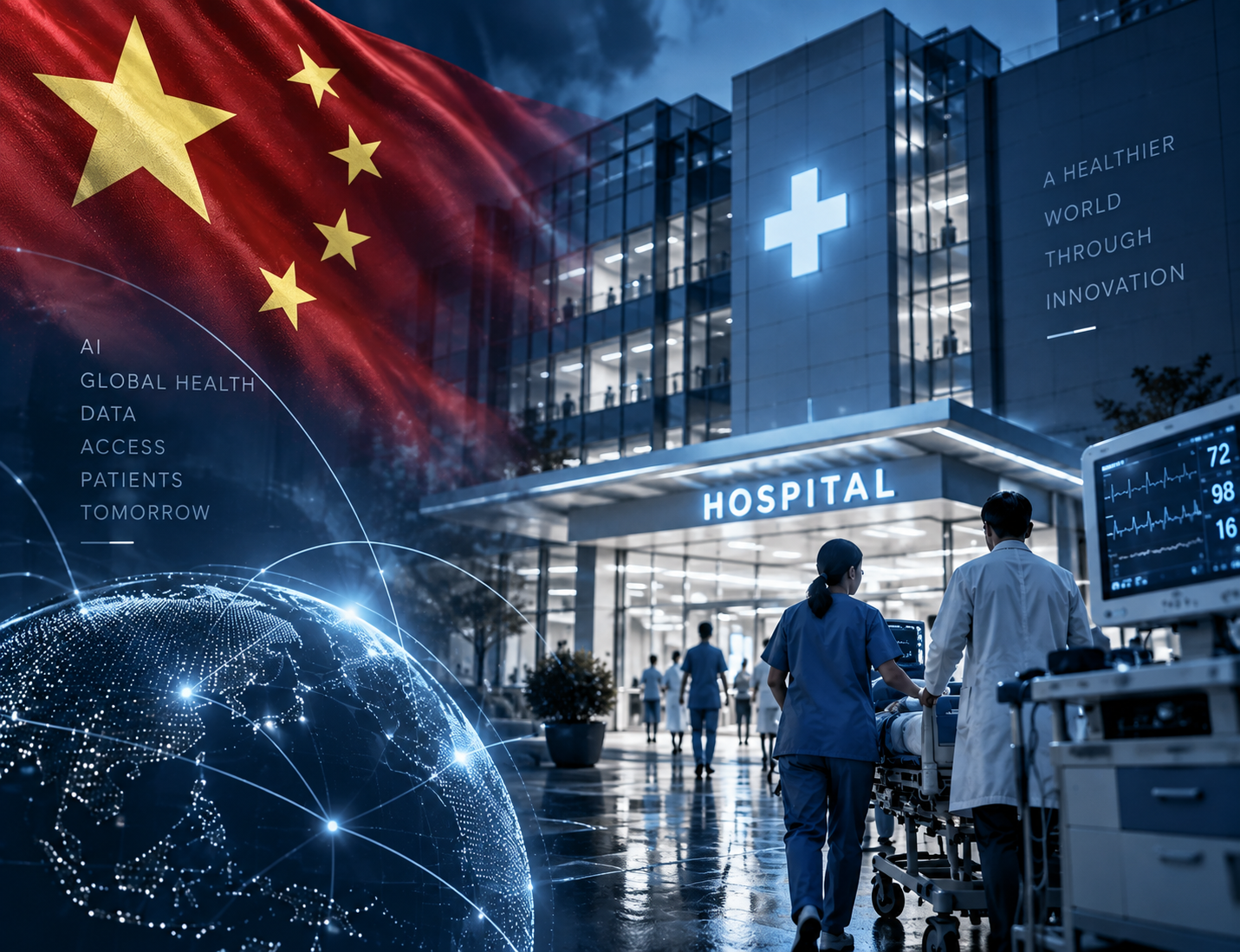
On March 26, 2026, China opened what officials describe as its first "AI hospital" in Boao, Hainan Province—an institution designed not merely to use artificial intelligence as a diagnostic add-on, but to restructure how patients move through the healthcare system entirely. For physicians and health system leaders elsewhere, the launch offers an early, large-scale test case of what proactive, AI-integrated care delivery might look like in practice.
A Different Starting Point for Care
Traditional healthcare, by definition, begins when a patient feels unwell enough to seek help. The Hainan Boao Super Digital Intelligence Hospital Management Co.—operating under the "Super AI Hospital" banner within the Boao Lecheng International Medical Tourism Pilot Zone—is built around a different premise: that care should begin before symptoms fully present.
The hospital's model allows patients to upload records and symptoms remotely, after which AI performs initial triage and risk stratification. By the time a patient physically arrives, clinicians already have a structured case summary. Post-treatment, automated systems manage follow-up reminders and medication alerts.
According to Zhang Bangqun, general manager of the Super AI Hospital, the goal is to reverse the traditional search dynamic in care access: "the right medicine can now 'find' the right patient," he explained, describing how AI-driven matching connects patients to newly approved therapies without the delays of multi-hospital referrals.
The platform underpinning this approach includes what the hospital calls "thousand-disease agents" and "thousand-hospital agents"—AI modules that continuously track global drug and device data, flag eligible patients, and route them toward appropriate treatment pathways. The surrounding Lecheng pilot zone, approved by China's State Council in 2013, has become a testbed for this model: more than 30 medical institutions now operate there, and the zone has connected upward of 200,000 patients with more than 500 innovative medicines and devices approved abroad but not yet available domestically.
Establishing a Formal Definition
Concurrent with the Boao launch, an International Consensus on AI Hospitals was released at the 2026 World Digital Health Forum in Beijing, co-hosted by the Chinese Academy of Engineering and Tsinghua University. More than 700 representatives attended, including 10 academicians and 40 hospital presidents from countries including the United States, United Kingdom, Italy, and Indonesia—suggesting this is not an isolated domestic initiative but one drawing international clinical and policy interest.
The consensus distinguishes "AI hospitals" from AI-enhanced physical hospitals that already use machine learning for imaging, diagnostic support, or surgical planning. As Yu Rongshan, deputy director of the National Institute for Data Science in Health and Medicine at Xiamen University, noted, many hospitals still treat AI as a tool layered onto existing, campus-centered workflows. An AI hospital, by contrast, is defined by continuous monitoring via wearables and home terminals designed to detect abnormal signals before overt symptoms emerge, paired with a unified health record accessible whether a patient presents at a hospital, a community clinic, or through a mobile app.
Policy Scale and System-Level Momentum
This shift is occurring within a broader national policy framework rather than as scattered pilot activity. In November 2025, China's National Health Commission issued guidelines directing AI to support continuous care across prevention, diagnosis, rehabilitation, and long-term health management. The country's 15th Five-Year Plan (2026–2030), adopted in March 2026, formally identifies biomedicine as an emerging pillar industry and calls for AI industrial leadership through the decade.
The existing base is already substantial: as of May 2025, China had deployed approximately 300 medical large language models, and county-level remote imaging services had processed more than 68 million cases—figures that illustrate how quickly AI tools have penetrated primary-level healthcare infrastructure ahead of this more formalized "AI hospital" designation.
Caveats Physicians Should Weigh
The consensus authors themselves caution that the AI hospital remains an aspirational model rather than a fully realized one. Reporting from Guangming Daily has flagged a specific clinical concern: overly detailed AI-generated reports risk overwhelming patients with information, potentially increasing anxiety rather than reassurance—a finding relevant to any practice considering similar patient-facing AI tools. Separately, healthcare industry analysts such as Wang Xiaobin note that while upfront capital investment in AI hospital infrastructure is substantial, the anticipated returns include reduced patient wait and travel times alongside lower institutional labor and operating costs once systems mature.
Implications for Practice
For US-based physicians and administrators, the Boao model is less a template to copy than a signal of direction: continuous, remote-first monitoring integrated with in-person care, unified longitudinal records, and AI-mediated matching between patients and emerging therapies. As adoption scales in a large, centrally coordinated health system, the resulting data on patient outcomes, workflow efficiency, and cost—along with the information-burden concerns already surfacing—will offer an instructive, real-world reference point for AI integration decisions closer to home.